
Electrical Estimating Software for Minnesota Electrical Contractors

Winning Opportunities in the Gopher State
Winning electrical work in Minnesota requires more than what manual processes can provide — it requires a system built for a market shaped by strict licensing, supervision and inspection requirements.
Contractors have to navigate the Minnesota Electrical Code, licensing and supervision rules set by the Minnesota Department of Labor and Industry and permit and inspection fees that vary by job and jurisdiction. These requirements make accurate material takeoffs, labor calculations and cost estimates essential to protecting profit margins.
McCormick’s electrical estimating software is built to simplify the entire estimating process, providing the speed and data depth required to bid confidently, stay compliant and win more work across the state.
Critical Factors Impacting Your Washington Electrical Bids
Success in this market depends on having an estimating system that updates as fast as the codes do — one designed to keep your company profitable and compliant as the rules change.
That’s the standard McCormick is built to meet.
McCormick Helps Minnesota Electrical Contractors Win More Work
Minnesota’s electrical market rewards contractors who move fast.
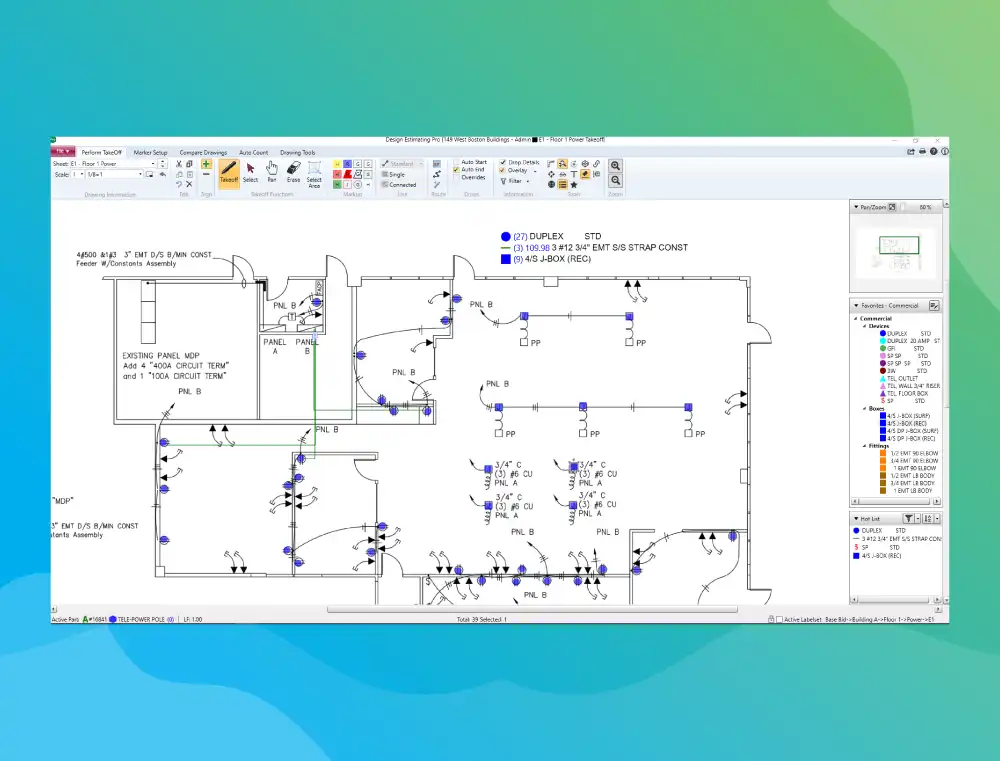
McCormick’s takeoff and estimating software is built to help your team work quickly and more accurately — giving your team the tools to automate the technical heavy lifting and submit winning bids with confidence.
Digital Takeoffs: Material Counting at the Speed You Need
From Twin Cities office towers and healthcare facilities to industrial plants and multifamily projects across the state, Minnesota drawing sets are dense. McCormick’s built-in takeoff tools help you move from plans to a finished bid quickly, without sacrificing the accuracy that protects your margin.
- NECA Labor Hours: Access thousands of pre-built assemblies with NECA labor hours already included
- Auto-Count: McCormick automatically recognizes and counts repeated symbols — like outlets or switches — across your plans, eliminating manual tallies on multi-floor drawing sets
- Auto Home Run: Once counts are locked, McCormick automatically calculates home runs back to the panel — including runs with multiple endpoints
In a market where bid windows don’t leave room for re-dos, the right tools help your team improve its bid-to-win ratio.

Dynamic Pricing: Protecting Margins Against Market Volatility
McCormick’s dynamic pricing tools connect directly to most supplier feeds, so your material costs reflect current market conditions.
When copper, switchgear and lighting costs shift mid-bid, even a perfectly executed takeoff can bleed margin before the job ever starts.
- Real-Time Pricing Updates: McCormick connects directly to supplier feeds from your connected distributors, so the numbers in your estimate are accurate
- Preferred Vendor Pricing: Add your preferred local Minnesota supply houses to pull regionally accurate pricing into your estimate
When supplier pricing is running real-time inside your estimate, material cost changes between bid day and breaking ground don’t become margin concerns.
US-Based Support Built Around Your Business
Accurate takeoffs and live pricing only go so far if your team can’t get help when someone has a question mid-bid. That’s why McCormick pairs its estimating tools with US-based support built to keep Minnesota contractors moving.
From day one, McCormick sets your team up for long-term success through structured, personalized onboarding:
- Dedicated Trainer: Every new McCormick customer is paired with a dedicated trainer who learns your business, understands how your team estimates and is available as your needs evolve
- One-on-One Training: Your onboarding is tailored to the specific project types, labor classifications and regional requirements your company handles
- Ongoing Access: Your relationship with McCormick’s support team doesn’t end after onboarding. Whether you’re adding new estimators, customizing assemblies or expanding into different types of electrical projects, McCormick’s support team is available
Minnesota Coverage
From commercial projects in Minneapolis and St. Paul to healthcare work in Rochester and industrial facilities in Duluth, St. Cloud and Mankato, electrical contractors across the state face different labor costs, inspection requirements and material pricing.
McCormick serves electrical contractors throughout the state — with pricing, service compatibility and regional support — so your estimates reflect the specific market you’re working in, not a statewide average.