
Electrical Estimating Software for Georgia Electrical Contractors

Winning Work in the Peach State
Georgia’s construction market is experiencing a historic, $100+ billion building boom — fueled by Atlanta’s commercial and industrial expansion, a wave of data center growing transportation and utility sectors.
For electrical contractors, that translates to real opportunity. But it also means more contractors chasing the same bids, tighter windows to submit and less room for error when the margin is already thin.
McCormick’s electrical estimating software is built to give Georgia electrical contractors the speed and accuracy to compete in this market — automating your takeoff, protecting your margins and keeping your team moving as the pipeline keeps growing.
Critical Factors Impacting Your Georgia Electrical Bids
Each of these factors adds complexity — and cost — to every bid you build.
Georgia draws contractors from across the Southeast and beyond. High-value projects in Atlanta’s Midtown and Buckhead corridors, data center campuses across the metro and infrastructure work receiving federal program funding make it a highly competitive market.
The right estimating system doesn’t just help you bid more — it helps you bid smarter, with the speed and accuracy to win jobs across every Georgia market you serve.
McCormick Helps Georgia Electrical Contractors Win More Work
Georgia has ranked among the fastest-growing states for construction activity — and as the market grows, so does the contractor base competing for it.
McCormick’s takeoff and estimating software helps Georgia electrical contractors build more efficient and accurate bids, keeping your numbers tight and freeing more time to bid.
Digital Takeoffs: Built for Georgia’s Fast-Paced Bid Environment
When multiple contractors chase the same Atlanta commercial project or the same data center infrastructure bid, speed and accuracy in your takeoff process determines how many opportunities you can realistically compete for.
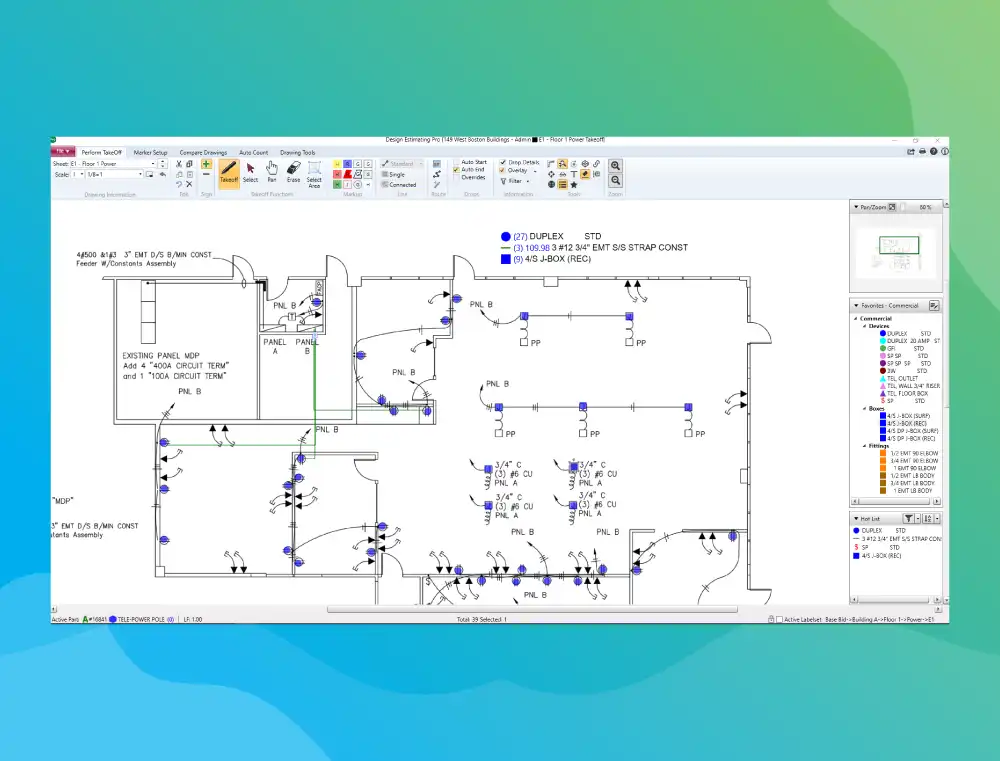
- Auto-Count: McCormick automatically recognizes and counts repeated symbols — like outlets, switches and fixtures — across your entire plan set, eliminating manual tallies on complex drawing sets
- Auto Home Run: Once counts are locked, McCormick automatically calculates home runs back to the panel — including runs with multiple endpoints — keeping your panel schedules accurate without the back-and-forth
- NECA Labor Hours: Access thousands of items and assemblies pre-populated with NECA labor hours and pricing — so your team spends less time building from scratch and more time refining bids that win
The faster your team moves from new plans to a finished bid, the more opportunities you can compete for — and in a market this active, that speed is a competitive edge.


Pricing Accuracy: Protecting Margin Across Georgia’s Markets
Metro Atlanta, Augusta, Savannah and Macon don’t operate on the same pricing. Material costs, labor rates and supply chain lead times shift across Georgia’s distinct regional markets — and what holds in one city can look meaningfully different a few hours away.
Running statewide averages is a sure way to underbid a job — or price yourself out of another.
- Real-Time Pricing Updates: McCormick connects directly to supplier pricing feeds from preferred distributors, so your numbers reflect current market conditions — not last quarter’s pricing
- Preferred Vendor Pricing: Add your preferred local Georgia supply houses to pull regionally accurate material costs directly into your estimate
When your supplier pricing is current inside your estimate, material cost surprises between bid day and project start become far less likely.
US-Based Support Built Around Your Business
Accurate takeoffs and current pricing only go so far if your team can’t get help when they have a question mid-bid. That’s why McCormick pairs it’s estimating software with US-based support built to keep Georgia’s contractors moving.
From day one, McCormick sets your team up for long-term success through structured, personalized onboarding:
- Dedicated Trainer: Every new McCormick customer is paired with a dedicated trainer who learns your business, understands how your team estimates and stays available as your needs evolve
- One-on-One Training: Your onboarding is tailored to the specific project types, labor classifications and regional requirements your company handles
- Ongoing Access: As Georgia’s regulatory environment shifts or your business grows into new markets, McCormick is there to help you adapt
Georgia Coverage
Georgia’s construction activity runs well beyond Atlanta. The metro core — Atlanta, Buckhead, Midtown and the surrounding suburban corridor — carries the highest project density and the most competitive bidding environment.
But Augusta, Savannah, Columbus and Macon each carry their own labor rates, supply chain dynamics and project profiles.
And Georgia’s data center and industrial corridor represents a distinct project type with specific electrical scope that demands accurate labor and material estimates.
McCormick serves electrical contractors throughout Georgia, providing localized labor data and regional pricing support so your estimates reflect the specific market you’re working in.