


by Patrick McCormick
August 20, 2026
Read Time: Less than 7 Mins
Last Modified: September 8, 2026
Share Article
Pre-bid construction document control starts the moment you get your hands on a project’s plans.
Attached to the project introduction email is a PDF — sometimes 50 pages, sometimes 200 — and somewhere inside it are the quantities, specs and details you need to put together an accurate proposal.
What you do with that document next shapes everything that follows: how competitive your bid is, how accurate it is, and whether all the work you put into it pays off.
For electrical, plumbing and mechanical contractors, this happens on repeat. You’re rarely working through just one set of plans — you’re tracking several bids at once, each with its own drawings, revisions and deadlines.
Getting that process under control is the key to staying profitable.
Key Takeaways
- Pre-bid construction document control covers how you receive, manage and use project plans throughout the estimating process
- Losing track of plan revisions or working from the wrong document version can throw off an entire bid
- Integrated takeoff and estimating software keeps construction documents, takeoff quantities and estimating data connected
- A materials database pre-loaded with assemblies and labor units means a revision doesn’t send you back to pricing something from scratch
- Document revision control helps estimators keep takeoff quantities, materials and labor aligned with the current bid documents
What Construction Document Control Covers
Pre-bid construction document control helps estimators make sure their takeoffs and estimates are based on the current drawings and specifications.
In pre-bid estimating, document version control helps make sure estimators are working from the current drawings, specifications and addenda.
In practice, that means catching revisions before they affect the quantities, materials, labor and pricing in your estimate.
Here’s a common scenario:
You download the bid set and start your takeoff. Partway through, the architect or engineer issues an addendum — an official update with revised drawings or specs.
If you don’t catch it, or restart work accidentally using the older version, your material counts are off. You either bid too low and take a loss or bid too high and lose the job.
How Plan Revisions Complicate Pre-Bid Document Control
Plan revisions complicate pre-bid document control because estimators have to identify what changed and update the affected takeoff and estimate items.
Revisions are a normal part of the bidding process.
Architects update drawings. Engineers revise specs. Owners change scope. The challenge is staying on top of those changes without redoing all your work from scratch.
Effective pre-bid document control helps estimators incorporate revisions without rebuilding the estimate from scratch.
That requires a system where your takeoff is directly connected to your estimate — so when something changes, you’re updating one place, not five.
What Happens When Pre-Bid Document Control Breaks Down
Poor pre-bid document control can cause outdated drawings or specifications to carry incorrect quantities, materials and labor into the estimate.
Take that same missed-addendum scenario, but say the revision specifically swapped a pipe run from copper to PVC.
The takeoff still pulls copper pricing and copper assembly labor from the database, and unless someone catches it before the bid goes out, it’s priced for the wrong material entirely.
That kind of mismatch rarely stays hidden for long. Sometimes your project manager catches the discrepancy once the job starts — but you’re still re-estimating and having an uncomfortable pricing conversation after you’ve already won the bid.
Other times it doesn’t get caught until the job is underway, leaving your original estimate built around material and labor assumptions that no longer match the required scope.
How One Missed Revision Affects the Entire Estimate
It’s not just the material cost that changes.
That copper-to-PVC swap doesn’t stop at the material line — it affects the assembly. It affects the labor units. It affects the total installed cost. One missed update in your construction documents cascades through the entire estimate.
This is why good document control focuses on tying your estimate back to the most current version of the project documents.
Building an Estimate From Digital Construction Documents
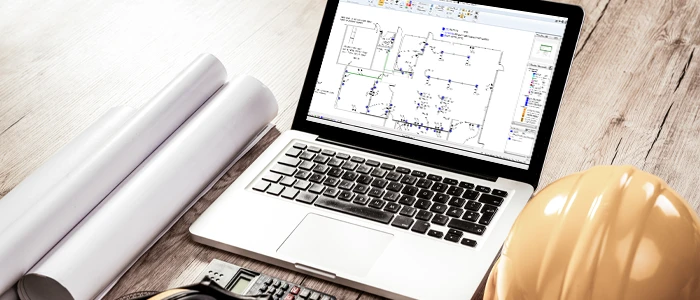
Good document control gets you the right version of the plans at the right time. But an estimate is only as accurate as what you do with that information next.
That’s where the right tools and habits come in — the ones that turn accurate construction documents into an accurate bid, addendum after addendum.
Using a Materials Database to Handle Revisions
A materials database helps estimators respond to document revisions without rebuilding material and labor pricing from scratch.
That matters when a revision comes in. If your takeoff is tied to a strong database, updating quantities after an addendum means checking numbers that are already there — not tracking down pricing and labor factors from scratch under deadline pressure.
A good estimating platform also connects with pricing services so your material costs stay current — which matters even more when a document revision changes what you’re pricing altogether.
How Plan Revisions Affect Labor Units
Labor units help estimators account for the labor impact when revised bid documents change materials or assemblies.
Labor is where most of the margin risk lives, especially on complex jobs. Pre-populated labor units give you a starting point based on industry standards, so when a revision swaps one assembly for another, the right labor factor comes with it.
The best estimating systems also let you customize those units to match how your crew works — so if your team runs faster or slower than the default on a task, you can adjust it and carry that forward on every future bid.
Over time, your estimates start to reflect your operation specifically.
From Bid Documents to a Finished Project
Winning the job is the goal, but your estimate doesn’t stop being useful once the contract is signed. The quantities, labor hours and pricing you built while bidding should carry forward into how you manage the project.
Here’s how that works:
Because your takeoff, your estimate and your project documents live in one connected system, the quantities and labor units you built during the bid become the baseline line items in your project budget — not a re-entry, but the same data carried forward. Each line stays tied to the document and revision it came from, so nothing has to be rebuilt from scratch once the job starts.
Reports let you check your estimate against actual costs as the job moves along, so you can see early if something’s drifting off track.
And when the scope changes, change order tools let you document it and update your pricing without starting the estimate over.

Stronger Pre-Bid Construction Document Control With the Right System
Pre-bid construction document control isn’t a separate task from estimating — it’s built into every step of the process.
The way you receive plans, track revisions, take off quantities and carry data forward to the project all depends on having the right tools in place.
McCormick is built for the way specialty contractors work. Everything you need to go from invite to bid to finished proposal lives in one place.
- Take off quantities directly from digital plans so measurements and estimating data stay connected
- Compare plan revisions using drawing overlays so estimators can identify changes before updating takeoff quantities and pricing
- Keep takeoff and estimating in one system so quantities, materials and labor stay connected throughout the bid
Talk to an expert and book a demo to see how McCormick fits your estimating and construction document management workflow.
Make Your Inbox Smarter
Keep on current news in the construction industry. Subscribe to free eNews!

October 1, 2026
How to Use Construction Estimating to Vet Projects Before You Bid
Picture this: A mid-size industrial job lands on your desk. The plans….
Read More

September 17, 2026
Design-Build vs. Design-Bid-Build: Why Your Estimating Software Choice Matters
Design-build is changing how electrical, plumbing and mechanical (MEP) contractors have to….
Read More